Cowichan Valley Regional District
54.8%
Daily life impacted

Understanding who lives in the Cowichan Region helps us see the full picture of health and well-being. Demographics like age, gender, education, employment, ethnicity, and income reveal the diversity of our community and provide context for survey results. Explore the data to learn more about the people behind the numbers. For more information on geographic boundaries, please see the Local Health Area maps.
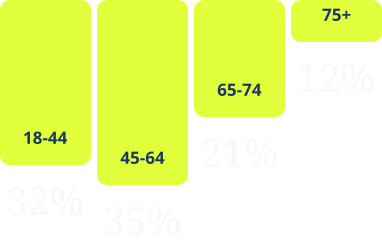
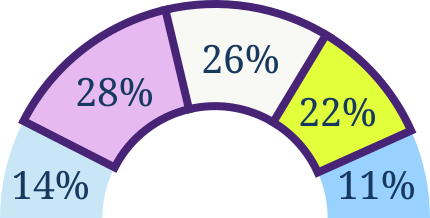
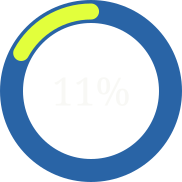
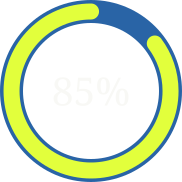
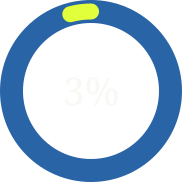
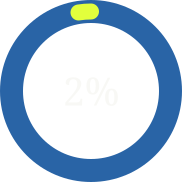
Survey respondents by ethnicity: 11% Indigenous, 85% not a visible minority, 3% visible minority, 2% other.
Understanding who lives in the Cowichan Region helps us see the full picture of health and well-being. Demographics like age, gender, education, employment, ethnicity, and income reveal the diversity of our community and provide context for survey results. Explore the data to learn more about the people behind the numbers. For more information on geographic boundaries, please see the Local Health Area maps.
Survey respondents by ethnicity: 11% Indigenous, 85% not a visible minority, 3% visible minority, 2% other.
Bar chart showing the percentage of respondents who rated their health as Excellent/Very Good or Fair/Poor across Cowichan Valley Regional District, Cowichan Valley North, Cowichan Valley South, and Cowichan Valley West. Exact values are provided in the table below.
| Region: | Excellent/Very Good | Fair/Poor |
|---|---|---|
| Cowichan Valley Regional District | 36.6% | 26.6% |
| Cowichan Valley North | 41.3% | 26.9% |
| Cowichan Valley South | 36.5% | 27.6% |
| Cowichan Valley West | 32% | 20.5% |
Most residents have a regular healthcare provider, but many still face challenges accessing the care they need. For those who struggle, gaps in access can take a real toll on health, highlighting the importance of improving healthcare availability across the Cowichan Region.
Radial chart showing the percentage of respondents who have a regular health care provider across Cowichan Valley Regional District, Cowichan Valley North, Cowichan Valley South, and Cowichan Valley West. Exact values are provided in the table below.
| Region: | Percentage: |
|---|---|
| Cowichan Valley Regional District | 83.8% |
| Cowichan Valley North | 82.9% |
| Cowichan Valley South | 84.1% |
| Cowichan Valley West | 83.8% |
Daily stress, social connections, and living situations all shape mental health. While many report good or excellent mental well-being, challenges persist: about one in three rate their mental health as fair or poor, and the data showed one in five adults live alone (particularly older adults).
Bar chart showing the percentage of respondents who rated their mental health as Excellent/Very Good or Fair/Poor across Cowichan Valley Regional District, Cowichan Valley North, Cowichan Valley South, and Cowichan Valley West. Exact values are provided in the table below.
| Region: | Excellent/Very good | Fair/poor |
|---|---|---|
| Cowichan Valley Regional District | 37.9% | 31.1% |
| Cowichan Valley North | 40.4% | 23.2% |
| Cowichan Valley South | 36.4% | 33.7% |
| Cowichan Valley West | 40.4% | 25.8% |
Graph showing the percentage of respondents who felt lonely or isolated All/most of the time or Some/a little of the time across Cowichan Valley Regional District, Cowichan Valley North, Cowichan Valley South, and Cowichan Valley West. Exact values are provided in the table below.
| Region: | All/most of the time | Some/a little of the time |
|---|---|---|
| Cowichan Valley Regional District | 12% | 53.1% |
| Cowichan Valley North | 12.2% | 53.5% |
| Cowichan Valley South | 12.5% | 53.8% |
| Cowichan Valley West | 11.7% | 46.2% |
Stable housing supports both health and a sense of belonging, but nearly a third of residents face insecurity. Renters in particular often spend more than 50% of their income on shelter, making it harder to cover essentials like food and healthcare.
Graph showing the length of time respondents lived across Cowichan Valley Regional District, Cowichan Valley North, Cowichan Valley South, and Cowichan Valley West. Exact values are provided in the table below.
| Region: | Less than 3 years | 3 - 10 years | More than 10 years |
|---|---|---|---|
| Cowichan Valley Regional District | 10.1% | 23.4% | 66.4% |
| Cowichan Valley North | 13.7% | 31.9% | 54.5% |
| Cowichan Valley South | 9.9% | 20.9% | 69.2% |
| Cowichan Valley West | 7.3% | 25.3% | 67.4% |
Bar graph showing percentage of respondents with either Home ownership with or without mortgage, Home rental, or Unsheltered, temporary housing or vehicle across Cowichan Valley Regional District, Cowichan Valley North, Cowichan Valley South, and Cowichan Valley West. Exact values are provided in the table below.
| Region: | Home ownership with or without mortgage | Home rental | Unsheltered, temporary housing or vehicle |
|---|---|---|---|
| Cowichan Valley Regional District | 66.9% | 16.7% | 7.4% |
| Cowichan Valley North | 74.7% | 16.8% | Suppressed |
| Cowichan Valley South | 63.1% | 17.9% | 9.3% |
| Cowichan Valley West | 79.4% | 11.7% | Suppressed |
Bar graph showing percentage of Homeowners that Spend more than 30% and Renters that Spend more than 50%, across Cowichan Valley Regional District, Cowichan Valley North, Cowichan Valley South, and Cowichan Valley West. Exact values are provided in the table below.
| Region: | Homeowners that Spend more than 30% | Renters that Spend more than 50% |
|---|---|---|
| Cowichan Valley Regional District | 28.8% | 55.5% |
| Cowichan Valley North | 25.1% | 46.1% |
| Cowichan Valley South | 29.1% | 58.4% |
| Cowichan Valley West | 35% | 0% |
Radial graph showing percentage of respondents who faced periods of instability or being unsheltered across Cowichan Valley Regional District, Cowichan Valley North, Cowichan Valley South, and Cowichan Valley West. Exact values are provided in the table below.
| Region | Percentage of respondents who faced periods of instability or being unsheltered |
|---|---|
| Cowichan Valley Regional District | 15.5% |
| Cowichan Valley North | 11.3% |
| Cowichan Valley South | 16.7% |
| Cowichan Valley West | 17.7% |
Using fewer substances supports better health outcomes. In the Cowichan Region, alcohol is the most common choice, but consumption is generally light. Cannabis use is less frequent, and most people have never smoked or have quit smoking cigarettes, marking strong wins for community health.
Graph showing percentage of respondents who Never smoked, Smoked in the past, or Smoke daily/occasionally across Cowichan Valley Regional District, Cowichan Valley North, Cowichan Valley South, and Cowichan Valley West. Exact values are provided in the table below.
| Region | Never smoked | Smoked in the past | Smoke daily/occasionally |
|---|---|---|---|
| Cowichan Valley Regional District | 40.9% | 17.8% | 41.4% |
| Cowichan Valley North | 42.6% | 14.4% | 43% |
| Cowichan Valley South | 38.4% | 19.8% | 41.8% |
| Cowichan Valley West | 54.8% | 13.1% | 32.1% |
Graph showing percentage of respondents who have used E-cigarette/vaping or Marijuana/hash in the last 12 months across Cowichan Valley Regional District, Cowichan Valley North, Cowichan Valley South, and Cowichan Valley West. Exact values are provided in the table below.
| Region | E-cigarette/vaping | Marijuana/hash |
|---|---|---|
| Cowichan Valley Regional District | 12.9% | 34.9% |
| Cowichan Valley North | Suppressed | 38.3% |
| Cowichan Valley South | 14.8% | 34.2% |
| Cowichan Valley West | Suppressed | 35.3% |
Graph showing percentage of respondents who Never Drink or Regularly Drink across Cowichan Valley Regional District, Cowichan Valley North, Cowichan Valley South, and Cowichan Valley West. Exact values are provided in the table below.
| Region | Never Drink | Regularly Drink |
|---|---|---|
| Cowichan Valley Regional District | 21.2% | 61.8% |
| Cowichan Valley North | 19.1% | 62.8% |
| Cowichan Valley South | 21.5% | 61.9% |
| Cowichan Valley West | 20.1% | 59.9% |
Graph showing percentage of respondents who have 0 drinks per week, 2 drinks or less per week, 3 - 6 per week, or 7+ drinks per week across Cowichan Valley Regional District, Cowichan Valley North, Cowichan Valley South, and Cowichan Valley West. Exact values are provided in the table below.
| Region | 0 drinks per week | 2 drinks or less per week | 3 - 6 per week | 7+ drinks per week |
|---|---|---|---|---|
| Cowichan Valley Regional District | 21.4% | 35.3% | 24.2% | 19.2% |
| Cowichan Valley North | 17.2% | 33.9% | 23.4% | 25.5% |
| Cowichan Valley South | 22.0% | 36.6% | 24.2% | 17.3% |
| Cowichan Valley West | 22.7% | 29.2% | 20.9% | 27.3% |
Graph showing percentage of respondents who have used other substances in the year prior to taking the survey across Cowichan Valley Regional District, Cowichan Valley North, Cowichan Valley South, and Cowichan Valley West. Exact values are provided in the table below.
| Region | Percentage of respondents who have used other substances in the year prior to taking the survey |
|---|---|
| Cowichan Valley Regional District | 15.1% |
| Cowichan Valley North | Suppressed |
| Cowichan Valley South | 16.8% |
| Cowichan Valley West | 13.4% |
Strong social ties and connections to the local community support mental well-being and resilience. When people feel they belong and have someone to confide in, the whole community thrives.
Graph showing percentage of respondents who have 1-3 people or 4 or more people they can lean on when they really need help across Cowichan Valley Regional District, Cowichan Valley North, Cowichan Valley South, and Cowichan Valley West. Exact values are provided in the table below.
| Region | 1-3 people | 4 or more people |
|---|---|---|
| Cowichan Valley Regional District | 53.7% | 40.7% |
| Cowichan Valley North | 53.3% | 44.0% |
| Cowichan Valley South | 53.3% | 40.4% |
| Cowichan Valley West | 57.4% | 36.5% |
Graph showing percentage of respondents who feel 1-3 people or 4 or more people sense of belonging across Cowichan Valley Regional District, Cowichan Valley North, Cowichan Valley South, and Cowichan Valley West. Exact values are provided in the table below.
| Region | Very/somewhat strong | Very/somewhat weak |
|---|---|---|
| Cowichan Valley Regional District | 41.3% | 58.7% |
| Cowichan Valley North | 42.9% | 57.1% |
| Cowichan Valley South | 42.2% | 57.8% |
| Cowichan Valley West | 33.8% | 66.2% |
Comfortable, energy-smart homes and regular time in parks, trails, and beaches protect both physical and mental health. Spending time outdoors also strengthens social bonds, reinforcing the value of accessible natural spaces.
Graph showing percentage of respondents with Electric heat pump or baseboards, Furnace (gas, oil or wood pellet), Other (boiler, space heater or other), or Stove (wood, gas, wood pellet) methods across Cowichan Valley Regional District, Cowichan Valley North, Cowichan Valley South, and Cowichan Valley West. Exact values are provided in the table below.
| Region | Electric heat pump or baseboards | Furnace (gas, oil or wood pellet) | Furnace (gas, oil or wood pellet) | Furnace (gas, oil or wood pellet) |
|---|---|---|---|---|
| Cowichan Valley Regional District | 62.9% | 14.5% | 7.7% | 14.8% |
| Cowichan Valley North | 51.4% | 19.2% | 12.6% | 16.7% |
| Cowichan Valley South | 66.0% | 13.3% | 7.0% | 13.7% |
| Cowichan Valley West | 69.1% | 9.3% | Suppressed | 17.9% |
Graph showing percentage of respondents with air conditioning or heat pumps across Cowichan Valley Regional District, Cowichan Valley North, Cowichan Valley South, and Cowichan Valley West. Exact values are provided in the table below.
| Region | Percentage of respondents with air conditioning or heat pumps |
|---|---|
| Cowichan Valley Regional District | 68.3% |
| Cowichan Valley North | 69.0% |
| Cowichan Valley South | 69.3% |
| Cowichan Valley West | 72.8% |
Graph showing percentage of respondents who spend Everyday or Often outdoors across Cowichan Valley Regional District, Cowichan Valley North, Cowichan Valley South, and Cowichan Valley West. Exact values are provided in the table below.
| Region | Everyday | Often |
|---|---|---|
| Cowichan Valley Regional District | 31.40% | 43.70% |
| Cowichan Valley North | 39.70% | 40.50% |
| Cowichan Valley South | 28.10% | 45.40% |
| Cowichan Valley West | 33.60% | 44.10% |
Access to affordable, nutritious, and safe food is essential for well-being. Even with generally strong food security, about one in four residents worry food may run out before they can buy more, a stress that can affect physical, mental, and social health.
Transportation shapes how connected we feel. While some residents use public transit regularly, many find it doesn’t meet their needs, signaling opportunities to improve access, mobility, and overall health outcomes.
Graph showing percentage of respondents who use public transportation across Cowichan Valley Regional District, Cowichan Valley North, Cowichan Valley South, and Cowichan Valley West. Exact values are provided in the table below.
| Region | percentage of respondents who use public transportation |
|---|---|
| Cowichan Valley Regional District | 17% |
| Cowichan Valley North | 8.70% |
| Cowichan Valley South | 18.40% |
| Cowichan Valley West | 18.10% |